
A year after 80 unarmed protesters were gunned down in Borama, the government and local elites are trying to ban their remembrance. But the youth and women of Awdal refuse to let their martyrs be forgotten a second time.
In the city of Borama, grief has become a battleground.
With less than three weeks remaining until December 5, 2026, a heavy, tense silence has been imposed upon the Awdal region. But beneath the surface, a fierce digital and physical resistance is brewing. The state and its allied traditional elders are scrambling to ban the first anniversary of a devastating massacre. The youth and women of Awdal, however, are digging in their heels. Their message is simple, yet seismic: We will remember.
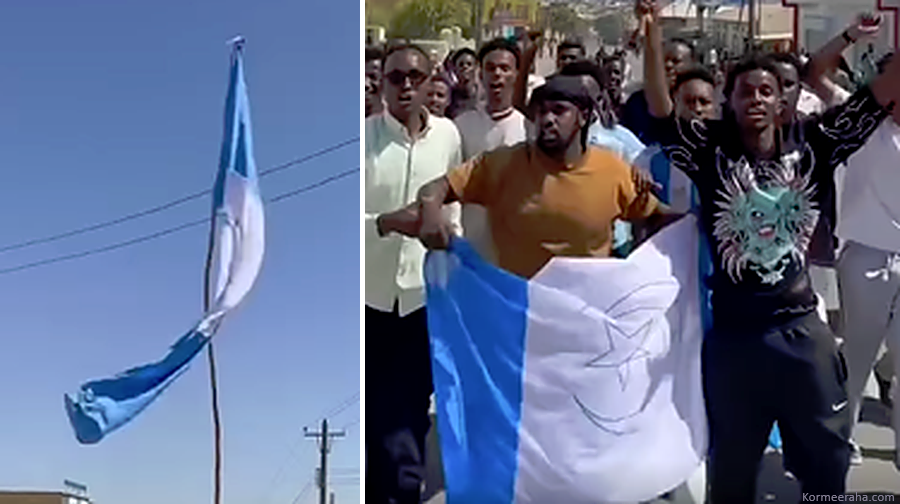
To understand the flashpoint, one must look back to the bloodshed of December 2025. Sparked by the Somaliland government’s decision to permit a Djibouti-sponsored event that laid claim to the historic Awdal port town of Zeila, unarmed youth and women took to the streets of Borama. The protesters marched not with weapons, but with hope. Carrying no shields but to save their dignity, the crowds demanded justice and rejected the illegal annexation of their lands.
“The protestors marched not with weapons, but with hope, carrying no shields but to save their dignity.”
Yet, they were met with live ammunition.
In a harrowing display of state-sanctioned brutality between December 4 and 7, security forces gunned down 80 unarmed civilians and severely injured over 300 others. They paid the ultimate price for their motherland, sealing their devotion with their blood.
Today, as the global community pauses to honour fallen champions of liberty, Awdal stands bearing a profound and bleeding grief. But the tragedy of December 5th is no longer just about the bullets fired a year ago; it is about the bureaucratic and cultural erasure being weaponized against the victims today.
The Erasure Campaign
As the anniversary approaches, the machinery of the state has been mobilized to ensure the dead stay silent.
The Governor of Awdal, Hassan Dahir Haddi (Hassan Eid), has launched a sweeping crackdown to prevent any public mourning. His tactics have been uncompromising: issuing stark written warnings to the youth, mobilizing civil servants and security agencies to deny any support for the anniversary, and holding emergency closed-door meetings with traditional leaders to enforce a blanket ban on the gatherings. Citing the need to “preserve peace and stability,” the regional administration has officially outlawed the commemoration, warning that it will rekindle old grievances.
This narrative of “preserving peace” is echoed by a faction of local traditional elders, such as Sultan Muse Arab Dugsiye, and segments of the business community. They argue that Borama is not ready for a commemoration, warning of potential turmoil and the looting of businesses. To them, the “Commemorate and Remember” campaign—championed by local youth, women, and diaspora supporters of Awdal self-administration—is viewed as a dangerous, politicized provocation against the Hargeisa government.
But to the families of the fallen, this enforced amnesia is a profound insult.
“To criminalize remembrance is to murder the martyrs a second time.”
A History of Denied Tears
The controversy over December 5 is not an isolated incident; it is a painful echo of history. The people of Awdal have long been denied the right to openly mourn their dead.
The most glaring historical parallel is the February 4, 1991 massacre, where unarmed civilians were slaughtered in Borama and Dila during the civil wars. For years, successive Somaliland administrations banned public mourning for the “February 4 Martyrs,” arguing that remembering the civil war undermined national reconciliation. Security forces were routinely placed on high alert every February, arresting those who dared to pray for their dead in public squares.
The state’s logic remains unchanged: Remembering the past threatens the peace of the present. But the people of Awdal argue a fundamental truth: remembrance is an unalienable human right. When other regions are allowed to commemorate their hardships, the blanket ban on Awdal’s grief feels less like a peacekeeping measure and more like a continuation of oppression.
THE Betrayal of the Elites
Yet, the most agonizing paradox for the people of Awdal is not just the oppression from Hargeisa, but the complicity at home.
While communities worldwide unite to honor their innocents, a grotesque betrayal is unfolding within Awdal’s own ranks. Contemporary Gadabursi leadership—intellectuals, clan elders, and politicians—have largely chosen to mirror the oppressors. Rather than standing as shields for their constituents and demanding accountability for the slaughter of their children, these leaders are actively facilitating the incarceration and suppression of their own people.
It is an unforgivable historical betrayal. Intellectuals who trade their integrity for political expedience, and tribal elders who sell out their youth for transient patronage, share a heavy moral burden.
“When traditional elites weaponize their authority to suppress peaceful commemoration, they forfeit their moral legitimacy.”
They demonstrate a chilling preference for political comfort over ancestral honour. But history remembers those who built walls to hide the truth, just as it honours those who broke them down.
The Flames Endures
Despite the security threats, the banning of weapons, the clan mobilization alerts, and the fierce rejection from the administration, the spirit of Borama’s youth and women remains unbroken.
Local media and social networks are flooded with videos of women and youth insisting that December 5 must be marked. They view it not as a political provocation, but as a sacred duty. The diaspora, too, is amplifying their voices, turning a local tragedy into a global testament of resilience. Oppression survives not merely through the strength of the tyrant, but through the compliance of local enablers. But the enablers are finding that the youth of Awdal will not comply.
To the grieving families, the wounded survivors, and the resilient youth of Awdal, the message from the shadows of history is clear: do not despair. The sacrifices of December 5th have sown seeds of an unyielding consciousness that no prison cell can contain and no corrupt decree can erase.
The blood of martyrs is the seed of freedom. No amount of suppression, censorship, or intimidation can extinguish the memory of those who died so that others might live with dignity. History does not measure a people by the weapons they bear, but by the courage of those who refuse to bow in the face of tyranny.
The eternal flame over Awdal burns brightly today, casting a harsh light upon the faces of both the heroes and the betrayers. The 80 are remembered. The 300 injured are honoured. And as December 5 approaches, the people of Awdal are sending a final, unyielding mandate to the state and the elders who would silence them:
“You can ban our gatherings, but you cannot ban our memory. We will never be forgotten.”
Related
- Awdal’s Fault Lines: How May 18 Exposed Somaliland’s Deepest Crisis (May 18, 2026)
- Between the Reflection of Xeer Ciise and the Resolve of Awdal (December 18, 2025)
- Dila Massacre 1991 (February 4, 2022)
- Borama Massacre: The Right To Remember (February 3, 2022)
- The Flag Martyrs Of Somaliland (June 26, 2021)