

The Republic of Djibouti celebrates its 46th year of independence from France on June 27th. For almost half a century, the country located in the Horn of Africa—which General Charles de Gaulle once called the “confetti of the Empire”—would be ruled by a single family. For 46 years, has Djibouti remained away from Somalia, or hasn’t it? How far has it come since its independence from France in 1977? And what do we really know of the tiny territory that wants to punch above its weight?
A quick tour of Djibouti
Brief history
In ancient times, Djibouti was part of the Land of Punt, which encompassed all of the northern Somali coast. The territory interacted with the Pharaohs and supplied Egypt with much-needed staples, mainly frankincense, myrrh, native plants, and wild animals.
In the medieval period, its rule changed fate but mostly fell under the authority of the ancient port city of Zeila, itself part of the Ottoman empire until 1880s. Djibouti—pronounced “Jibuti,” Jabuuti in Somali, and Gabuuti in the local Yemeni dialect—was colonized by France for around a century. It was the only French colony in East Africa.
Strategic Location and Ethnic Makeup
The tiny 23,000 km² territory—much smaller than Somalia’s Hiran region and about half the size of the Sool region of Somalia—draws its appeal from its strategic location at the mouth of the Red Sea. The French settled there to protect their holdings in the Suez Canal.
Many in Somalia falsely believe that Djibouti is Somali territory. This is partly true, however, much of Djibouti’s territory—about three-quarters (some say four-fifths)—is Afar territory. The Afars, who come from the same Cushitic stock as the Somalis, are divided between Ethiopia, Djibouti and Eritrea, in what is called the Afar Triangle. There is also a small but very enterprising Yemeni population that controls the various commercial sectors of the country.
Demographics and Infrastructure
The overall population of nearly one million is relatively young, and half live in the capital, Djibouti City. The territory is largely arid all year round, and the rare spring rains flood the streets of the capital, whose colonial-built sewers—neglected since independence—are clogged.
Economy and Stability
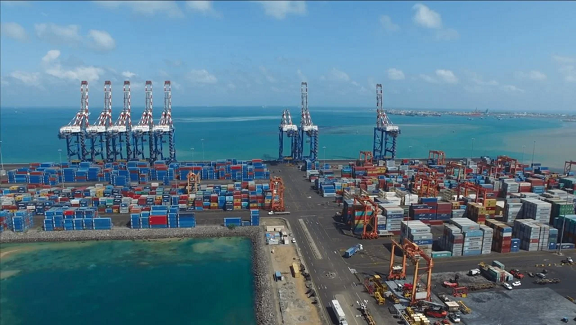
Djibouti has no known mineral resources. Its economy is based on services and trade, and all economic activities are turned towards the Port of Djibouti, which serves as a lifeline for landlocked Ethiopia. Along with a short civil war in the early 1990s, Djibouti has been branded as a “haven of peace”—a condition conducive to trade and tourism in a most troubled region.
Dynamics of local politics
Ethnic and Clan Seat Allocation
Djibouti’s 65-seat parliament has been divided since the 1970s, allocating 28 seats to Afars, 27 to the Issa clan, 4 to the Isaaq clan, 3 to the Gadabursi clan, 2 to Yemeni Arabs, and 1 to the Darod clan. This inherited colonial divide-and-rule scheme was perpetuated by the ruling clan to its advantage, and any attempt to allocate seats in proportion to demographic reality or revamp the system—which disadvantages many Djiboutians—has been discouraged.
Exclusion of Mixed Population
Moreover, the rigid exclusionary political system of the state does not recognize a large part of the population who do not identify with any of these groups. Intermarriage between the various ethnic groups, especially in the capital, has created a growing mixed population that is excluded from the system despite being born and raised in reputable families.
The Power Pyramid
The pyramidal political system places Ismail Omar Guelleh Batal as the ruling family. The Guelleh Batal are followed by their Issa Mamasan sub-clan, themselves followed by other Issas, and then the rest. The Prime Minister post is reserved for an Afar who belongs to the ruling party. However, the Prime Minister has no executive powers and is limited to chairing cabinet meetings, cutting ribbons at inaugurations, and shadowing the president.
President Ismael Omar Guelleh (IOG)
President Ismael Omar Guelleh has ruled unchallenged since he was elected president in 1999. In reality, IOG had been a pillar of power since 1977 as Director of the Djiboutian secret service—the much-feared SDS, which he created in 1978—and as chief of staff under the presidency of Hassan Gouled Aptidon, his uncle.
Repression and Opposition
The system he rules with an iron fist is a fertile ground for nepotism, cronyism and corruption, and many popular protests against his rule and mismanagement have been brutally suppressed. In this context, freedom of speech and dissidence have a hard time. All the opposition figures have fled the country except one: the stubborn Dr. Abdirahman Barkhad God, whom Mr. Guelleh described as a fanatic during his last interview for Jeune Afrique.
Meddling in Somalia
Rise of the Isaaq Clan
With the First Lady ruling beside her ailing “Godfather-like” husband, the Isaaq clan has made steady progress within the system in the last two decades. Many of them are in the economy and finance sector and remain the backbone of the secessionists in Somaliland.
Influence Over Somali Politics
Moreover, since the Arta Conference in 2000, Ismail Omar Guelleh—despite ruling a tiny country—has a say in how Somali politics are conducted in Somalia. Opposing him, as Farmajo did, is political suicide. President Hassan Sheikh Mohamoud, as we have seen with the Irir Samale association, must dance to the Djibouti’s tune. The recent appointment of his son-in-law, Sadaq John, as Somalia’s ambassador to Djibouti, shows the extent of IOG’s stranglehold over Somalia.
Confrontation with Darod Leaders
Djibouti has been at odds with Somali leaders from the Darod clan and has worked hard to minimize their influence in Mogadishu. He was credited with conspiring with the Somali opposition to defeat Mohamed Abdullahi Farmajo, who got in his way to shape the region.
Military and Covert Operations
Djibouti’s role in Somalia came to the fore recently due to their support for support to Somaliland bombardment of Las Anod and IOG’s agreement with Kenya’s William Ruto to keep their troops there longer. Djiboutian troops operating under AMISOM/ATMIS are based in Jalalaqsi and are generally confined to logistical support for Somali forces fighting Al-Shabab in the Hiran region.
Lesser known are the regime’s territorial expansion in Awdal, the distribution of Djiboutian passports to secessionists, the illegal arms supply to Al-Shabab, and its role in laundering dirty money from Al-Shabab and previously from the pirates of the sea.
Punching above its weigh
Shift from France to the US
Increasingly at odds with France over its involvement in the 1990 Café de Paris attack and the assassination of French magistrate Bernard Borrel—who had come to investigate the deadly attack—IOG drifted towards the Americans. He then wholeheartedly embraced their “war on terror,” giving them access to Camp Lemonnier and “Black sites” for the CIA illegal rendition program.
Hosting Foreign Military Bases
Since then, IOG has milked Djibouti’s strategic position by providing bases to countries as diverse as China, Japan, Italy, Saudi Arabia, Germany, Spain, the Netherlands, Italy, the United Kingdom, in addition to French and US bases. Russia and India are considering to have their own bases in Djibouti.
Economic Windfall
This windfall brings in about 170 million dollars per year in rent, or about 10% of the nation’s budget, not counting the profit made from sectors of the economy that revolve around it, such as the hotel industry, prostitution, and other small businesses.
Growing Pressures at Home
In short, Djibouti has made its way into world politics, wanting to punch above its weight. The unbeatable IOG, although more cunning than all the junior leaders in the Horn of Africa, is increasingly pressured at home. Moreover, President Isaias Afwerki—an unshakable old warrior emerging from his isolation now that he has made friends with Ethiopia’s Abiy Ahmed—is preparing to arm the Afar opposition.