
President Hassan Sheikh Mohamud’s reported willingness to restore close ties with the United Arab Emirates (UAE) is deeply concerning. This is especially true without first addressing the lingering shadows of Abu Dhabi’s past interference in Somali affairs.
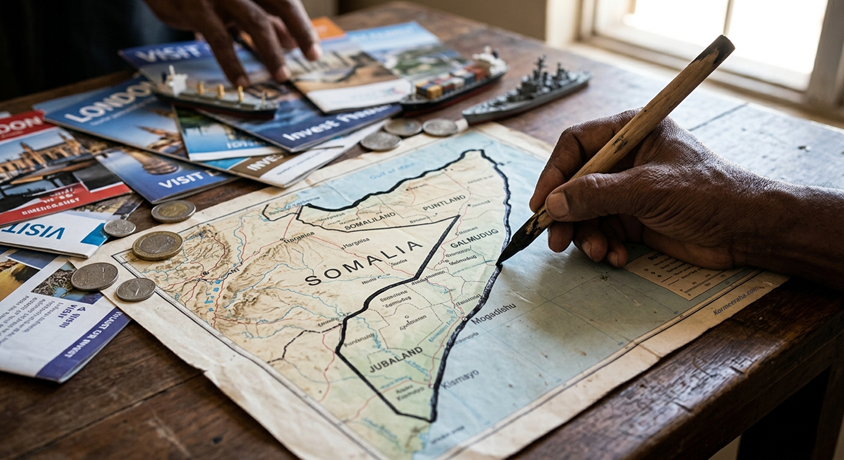
The fundamental question is one of sovereignty. How can Mogadishu forge a genuinely independent foreign policy while the UAE allegedly meddles in its federal member states? Kormeeraha Magazine documented Abu Dhabi’s pattern of cultivating parallel security agreements with regional states, seeking unchecked port access, and bypassing Mogadishu entirely. These actions strike at the very heart of Somalia’s ability to chart its own destiny.
No sovereign nation can afford to look the other way when foreign interests seek to dictate its domestic politics or security architecture. After decades of instability and external meddling, Somalia’s priority must be institutional consolidation and rebuilding its national armed forces.
“Decisions regarding Somali territory and security must be made in Mogadishu—not in foreign capitals.”
Reports suggest the UAE’s renewed interest aims to curb the influence of regional rivals like Qatar, Egypt, and Türkiye. If Abu Dhabi’s strategic calculus involves turning Somalia into a chessboard for proxy rivalries, Mogadishu must exercise extreme caution. No foreign power should dictate Somalia’s diplomatic roster or choose its allies.
Somalia’s foreign policy must not be reduced to an arena where external powers vie for influence. Mogadishu must tread carefully when forced to choose. Instead, it must pursue a balanced, pragmatic approach rooted in the national interest, mutual respect, and reciprocal benefit.
President Mohamud must learn from the past. Restoring diplomatic ties is not inherently flawed; nations routinely navigate periods of tension to rebuild cooperation. However, reconciliation requires clear conditions, enforceable agreements, and ironclad safeguards for national sovereignty. Without them, Mogadishu risks repeating the very mistakes that fractured the relationship initially.
Any renewed partnership with the UAE must therefore be predicated on transparency, strict non-interference, and full Somali ownership of its security decisions. Economic investment, trade, and infrastructure development should be welcomed if they tangibly benefit the Somali people. But military arrangements, security pacts, and financial commitments involving foreign troops must be subjected to rigorous public and parliamentary scrutiny.
These principles must apply equally to Qatar, Egypt, Türkiye, Ethiopia, Kenya, and any other nation seeking a foothold in Somalia.
“Friendship must never mean submission, and cooperation must never become a license for external control.”
Ultimately, Somalia does not need to exchange one foreign patron for another. It needs strong institutions, a capable national army, accountable leadership, and a foreign policy driven by its citizens’ interests. Mogadishu must be free to engage multiple partners without allowing its soil to become a battleground for regional rivalries.
The lesson is simple: Somalia needs friends, not protectors; partnerships, not dependency; and cooperation, not foreign supervision. Its foreign policy must be written in Mogadishu, not Abu Dhabi.
“If President Mohamud chooses to repeat yesterday’s mistakes, history will soon send him the bill—again. And unlike diplomatic courtesies, that invoice will come with interest.”