
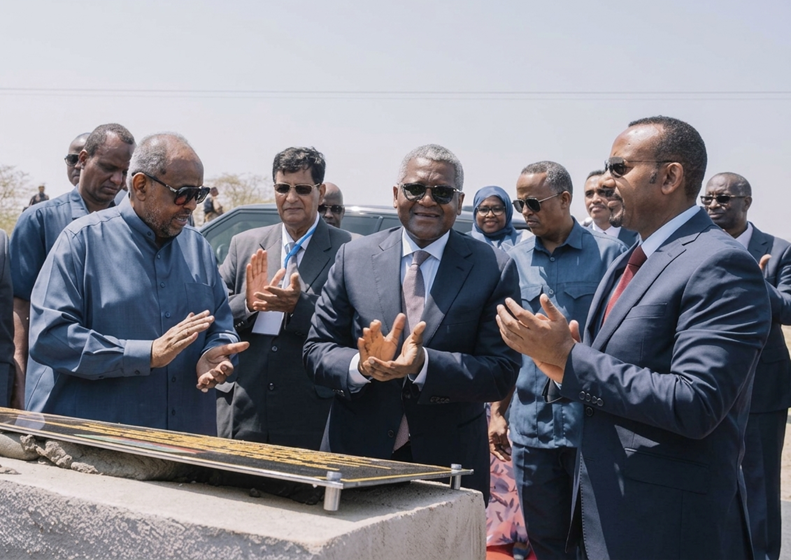
On September 24, 2026, the cameras flashed in Damerjog as Djiboutian President Ismaïl Omar Guelleh, Ethiopian Prime Minister Abiy Ahmed, and Nigerian tycoon Aliko Dangote broke ground on a $660 million oil infrastructure project. To the untrained eye, it was a standard ribbon-cutting ceremony for a new storage terminal and a 120-kilometer pipeline to Dewele, Ethiopia. But to those who watch the shifting sands of Horn of Africa geopolitics, this was something far more profound: a tectonic shift in the region’s economic architecture.
“The Dangote Group, an African industrial leviathan now casting its shadow over East Africa, is not merely building a pipeline. It is engineering a new logistical bloodstream for the region.”
Yet, as the dust settles in Damerjog, a rigorous analysis demands we look past the diplomatic handshakes. This project will undoubtedly transform Ethiopia’s energy security, but it also threatens to cannibalize Djibouti’s existing assets and erase the livelihoods of thousands in its informal economy.
The Landlocked Giant’s Existential Imperative
For Ethiopia, a nation of over 130 million people, energy security is not just an economic metric; it is an existential imperative. As Addis Ababa pushes for rapid industrialization, its appetite for refined petroleum products grows voraciously. Currently, this appetite is fed through Djibouti’s ports, exposing Ethiopia to a dual vulnerability.
Geopolitically, the Horn is a neighborhood of maritime chokepoints. Tensions in the Red Sea and the lingering shadows of Middle Eastern conflicts mean that Ethiopia’s fuel supply is perpetually at the mercy of global shipping lanes and spiking insurance premiums. Logistically, the current model is a relic: thousands of tanker trucks grinding up the Djibouti-Addis corridor, bleeding capital through delays, accidents, and inefficiencies.
The Damerjog–Dewele project is Addis Ababa’s answer to these frailties. By combining massive new storage capacity with a direct pipeline, Ethiopia is attempting to bypass the friction of road transport, secure its strategic reserves, and insulate its economy from external shocks. For Ethiopia, this is not a mere port investment; it is a masterstroke of national survival.
The Dangote Factor: A Regional Energy Axis
But the true geostrategic weight of this project only becomes apparent when we look south. Just six days after the Damerjog ceremony, Dangote broke ground on a colossal refinery in Lamu, Kenya.
The proximity of these two dates is no coincidence. While no formal commercial treaty has been publicly inked, the complementary nature of these mega-projects suggests a grander design: a unified East African energy axis. Imagine crude from Uganda, South Sudan, or Kenya’s Turkana region feeding the Lamu refinery, with the refined products shipped up the coast to Damerjog, and pumped directly into the Ethiopian market.
This bypasses the need for a perilous, multi-billion-dollar pipeline through northern Kenya’s insecure hinterlands. Instead, it leverages the sea and Djibouti’s existing maritime corridor. For Ethiopia, it means diversifying away from Gulf refineries. For Dangote, it is a masterclass in vertical integration, controlling the fuel chain from the refinery floor to the Ethiopian consumer.
Djibouti’s Dilemma: The Illusion of Infinite Growth
For Djibouti, the official narrative is one of unalloyed triumph: job creation, soaring port revenues, and the consolidation of its status as the Horn’s premier logistics hub. But policy watchers must ask the uncomfortable questions: At what cost, and to whom do the dividends actually flow?
Djibouti has already poured billions into the Damerjog Industrial Zone (DDID).
“A $660 million injection is welcome, but capital invested does not automatically equate to wealth retained.”
The critical missing pieces of the public puzzle are the joint-venture equity splits, the tax exemptions granted to foreign capital, and the actual repatriation of profits.
More pressing is the threat of self-cannibalization. Djibouti is currently saturating its own port with competing infrastructure. The new Dangote terminal boasts a capacity of 375,000 cubic meters—virtually identical to the existing Horizon Oil Terminal in Doraleh. Furthermore, a brand-new 288,000-cubic-meter terminal is slated to open in Doraleh by mid-2027.
If Ethiopian volumes are simply shifted from Doraleh to Damerjog—as Ethiopian Transport Minister Alemu Sime hinted at in February 2026, citing “saturation” and crippling demurrage costs at the older facilities—Djibouti risks marginalizing its own existing assets. A proliferation of terminals without a proportional explosion in regional demand will lead to idle capacity, cutthroat tariff wars, and diminished returns on past investments. Djibouti must ensure it is generating new wealth, not merely shuffling old money between its own pockets.
Balbala’s PK12: The Invisible Casualties of the Oil Revolution
While economists debate terminal capacities, a quieter tragedy is unfolding on the streets of Balbala. For decades, the Djibouti-Ethiopia road corridor has been the lifeblood of a massive informal economy. Every day, hundreds of Ethiopian tanker trucks queue at Doraleh.
While they wait, they spend. Around the PK12 axis and the dusty arteries of Balbala, an entire ecosystem thrives on the patience of these drivers. Marafiya bets (makeshift guesthouses), roadside tea shops, mechanics, and food vendors rely entirely on the daily influx of truckers. It is an economy that sustains an estimated 35,000 people, predominantly women, youth, and immigrants.
The Damerjog-Dewele pipeline will render this human logistics chain obsolete.
“For Ethiopia, replacing trucks with a pipeline is a triumph of efficiency. For the drivers, it is an economic death sentence. And for the residents of Balbala, it is the erasure of their livelihood.”
This human cost is entirely absent from the glossy financial prospectuses of the Damerjog project. The revenues of a street-side tea seller do not register on the balance sheets of the Djibouti Ports and Free Zones Authority. If the government is to champion this modernization, it has a moral and economic obligation to mitigate the fallout, lest the “progress” of Damerjog be built on the destitution of Balbala.
The Final Reckoning: Partner or Tollbooth?
The Damerjog–Dewele project is a microcosm of Africa’s broader push for regional integration and supply chain sovereignty. It brings together three distinct motives: Ethiopia’s need for security, Dangote’s hunger for market dominance, and Djibouti’s desire to monetize its geography.
But convergence of interest is not the same as an equality of outcome. Ethiopia brings the market; Dangote brings the capital and industrial might; Djibouti provides the land and the sea. The ultimate test of this tripartite alliance is whether Djibouti’s geostrategic concession is compensated fairly.
For the Horn of Africa, this project is a fascinating case study in the ruthless modernization of regional infrastructure. For Djibouti, it is a critical stress test. The success of the Damerjog project cannot be measured solely by the billions of dollars poured into the concrete, nor by the logistical savings enjoyed by Addis Ababa. It must be measured by the net wealth retained in Djibouti, the survival of its informal economies, and the sustainability of its port ecosystem.
As the pipelines are laid and the storage tanks rise on the Djiboutian coast, the fundamental question remains:
“In this new African energy architecture, will Djibouti emerge as an equal, empowered partner, or merely a well-compensated tollbooth on the highway to its neighbor’s security?”
Related
- The Squeezed State: Djibouti Caught in the Crossfire of the Horn (October 15, 2026)
- The Al-Alamein Summit: Forging a United Front Against Ethiopia’s Regional Ambitions (October 8, 2026)
- How Africa Can Stop Absorbing the World’s Crises (July 27, 2026)