
Somalia has failed to learn from one of the most consequential periods in its modern history: the 21 years of military rule from 1969 to 1991. More than three decades after the collapse of the central government, our country still struggles to confront its past honestly, teach its history objectively, and draw meaningful lessons from both its achievements and its failures. This is not merely a political failure; it is a national embarrassment.
Today, our schools offer little systematic education about the military coup of October 21, 1969, or the political, economic, social, and military developments that followed. More astonishingly, Somalia still lacks a cohesive national framework to make the study of our history a core component of primary and secondary education. Why? Perhaps some politicians fear that teaching history might force them to confront uncomfortable truths about their own political interests, clan loyalties, and failures of leadership.
A Curriculum of Silence
Imagine a nation so afraid of its own past that it would rather leave an entire generation in the dark than risk offending political factions.
“In Somalia, it seems, even history must obtain clan approval before entering the classroom.”
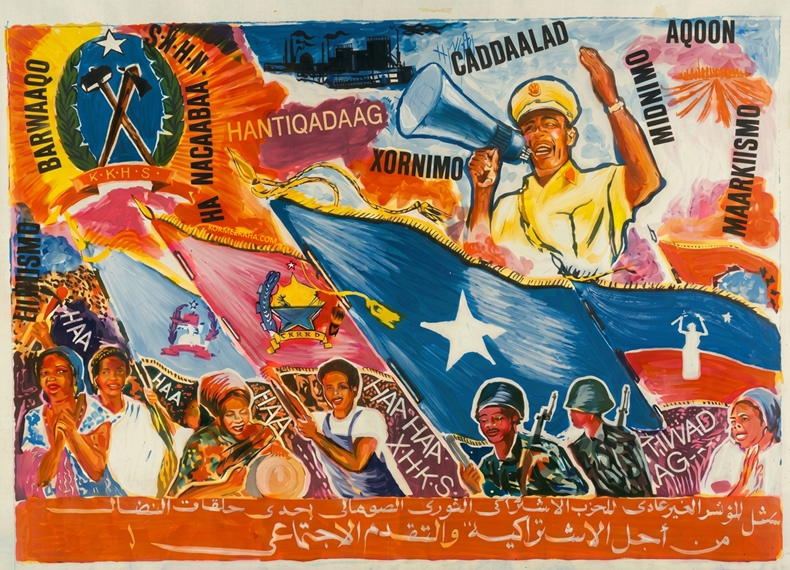
During the first five to six years of military rule, Somalia underwent significant transformations in state administration, economic planning, social mobilization, and national development. The government introduced the Somali Latin script in 1972, catalyzing a historic nationwide literacy campaign. Furthermore, the country developed substantial military capabilities, emerging as a notable power in the Horn of Africa and drawing intense international attention.
These milestones deserve serious historical examination. They should neither be exaggerated nor dismissed simply because they occurred under a military regime. Equally, we must unflinchingly acknowledge the state’s repression, human rights abuses, political exclusion, and destructive policies that ultimately contributed to the country’s collapse.
“Recognizing historical achievements does not mean excusing injustice, just as acknowledging atrocities does not require erasing every developmental milestone.”
Confronting Triumphs and Tragedies
A mature nation confronts all facets of its history without fear. Unfortunately, Somalia’s political culture too often treats historical discourse as a threat rather than an opportunity for national renewal.
Today, millions of Somalis have been born since the collapse of the central government in 1991. Many possess little to no knowledge of the country’s trajectory between 1969 and 1991. These young citizens deserve better than political propaganda, selective amnesia, and historical silence. They deserve access to reliable evidence, balanced curricula, and the intellectual freedom to form their own conclusions.
As Dr. Abdi Ulusso, I call upon former President Mohamed Abdullahi Farmaajo, former parliamentary leadership—including Speakers Mohamed Osman Jawari and Mohamed Mursal Sheikh Abdirahman—former Prime Minister Hassan Ali Khaire, and all current and former government officials to recognize the critical importance of this 21-year period. I urge them to support a comprehensive national initiative to document and teach Somalia’s modern history. Historical accuracy must always supersede political convenience.
A Blueprint for the Post-1991 Generation
Were I in government, I would propose legislation establishing Somali history as a compulsory core subject in all primary and secondary schools. Furthermore, I would advocate for the creation of an independent commission of historians, educators, and researchers tasked with impartially documenting our national experience, preserving both our accomplishments and the painful lessons of our past.
Let me be clear: this is not a call to glorify military rule or rehabilitate any specific political leadership. It is a call to educate our people, strengthen our national identity, and build a future informed by experience rather than ignorance.
Somalia cannot build a better future by pretending its past never happened. We cannot demand that our youth become responsible, engaged citizens while denying them the historical knowledge necessary to understand their country.
History Belongs to the People
My message is simple: history belongs to the Somali people, not to politicians, clans, or former regimes. If our leaders fear that teaching history will expose their failures, that is precisely why independent historical education is non-negotiable.
“A country that refuses to teach its history is not protecting national unity; it is surrendering its future to ignorance.”
If the study of history is deemed too politically dangerous for Somalia’s classrooms, then perhaps the real problem is not our history, but our politicians.
Related
Why the 1969 Revolution Still Matters Today (October 21, 2022)