

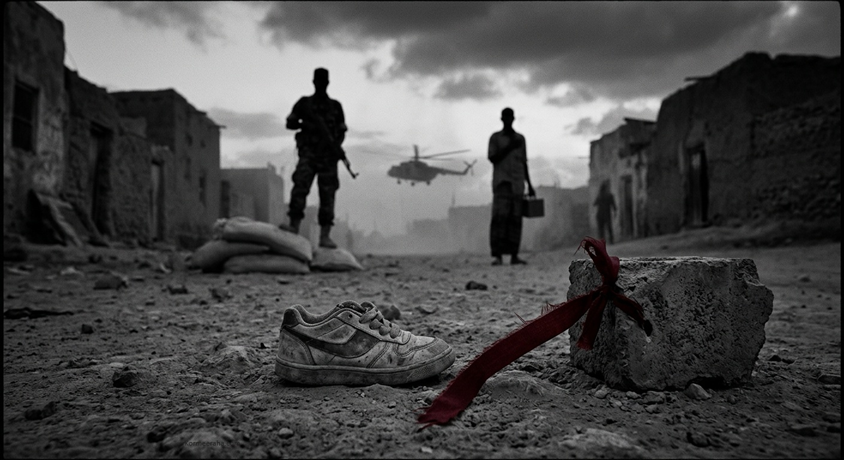
If Somalia had a national month of mourning, it would be October. October is when the sky fell. It is when the streets of Mogadishu ran with blood. It is when a truck bomb at Soobe turned a busy junction into a graveyard. It is when hotels, ministries, restaurants, and police academies became killing fields.
But let us be clear: October is not cursed by fate. It is cursed by politics, by impunity, and by three specific forces that have fed on Somalia’s collapse for decades.
To understand why October haunts the Somali psyche, we must look beyond the immediate horror of recent years and confront a hierarchy of horror. We must name the three evils that have kept this nation in chains: The Warlord. The Extremist. The Invader.
The Hierarchy of Horror
Somalis have killed Somalis. Warlords turned clan loyalty into a death sentence; Al-Shabab turned faith into a weapon. But one October stands apart in scale, firepower, and foreign responsibility: October 3–4, 1993.
To the West, it is Black Hawk Down. To Somalis, it was an American attack.
What began as a U.S. raid to capture two lieutenants of Mohamed Farrah Aidid became a 17-hour urban slaughter. After two Black Hawk helicopters were shot down, desperate American forces unleashed overwhelming firepower on a densely populated city. Eyewitnesses described indiscriminate fire into residential buildings.
The toll was catastrophic: credible estimates place Somali deaths between 1,500 and 2,000, with up to 4,000 wounded. Mark Bowden, author of Black Hawk Down, concluded that roughly 80 percent of the dead were civilians. “No single Al-Shabab October attack comes close. The deadliest October in living Somali memory belongs not to a Somali warlord or a militant group, but to a foreign army.”
“The deadliest October in living Somali memory belongs not to a Somali warlord or a militant group, but to a foreign army.”
Consider the scale: The 2017 Soobe truck bombing, Al-Shabab’s deadliest attack, killed at least 512 people. A crime against humanity, yes—but it does not eclipse October 1993.
This is not a competition of victimhood. It is a calibration of truth. The Western narrative sanitizes this history as a story of American survival, erasing the thousands of Somali corpses left in its wake.
The Three Evils of Lawlessness
To move forward, Somalia must diagnose the disease. The chaos of October is not random; it is the product of three distinct, recurring evils.
1. The Warlord
After 1991, clan militias carved Somalia into fiefdoms—extorting families, stealing aid, weaponizing famine. Defeat didn’t end the legacy; it rebranded it. Today many fiefdoms sit rebranded as “federal member states”: force holds power, dissent is crushed, refusal is punished. New faces, same methods.
2. The Extremist
Al-Shabab wrapped itself in Islam and murdered Muslims. It bombed ministries in 2011, killed 512 at Soobe in 2017, struck Baidoa in 2018, attacked Kismayo in 2022, and slaughtered more than 100 at Mogadishu’s education ministry later that same October. It has assassinated teachers, aid workers, elders, and journalists. It has made ordinary life a gamble with death.
“It has made ordinary life a gamble with death.”
3. The Invader
From the American-led operation of 1993 to the Ethiopian invasion of 2006, Kenyan incursions, U.S. drone strikes, and foreign “peacekeeping” forces that have killed civilians, outside powers have repeatedly turned Somalia into a battlefield. Some came as humanitarians. Some came as counterterrorists. Some came as occupiers. Too many left behind dead Somalis and no accountability.
Three evils. One lawlessness.
Remembrance as Resistance
October should be Somalia’s national month of mourning. Not because Somalis enjoy grief, but because remembrance is a form of resistance.
We propose a new calendar of conscience:
- Let October 14 be Soobe Remembrance Day.
- Let October 3–4 be a Day of the Fallen, honoring the thousands killed in 1993.
- Let the entire month be a National Month of Mourning, taught in schools, marked in mosques, and observed in every province.
We must build monuments at KM5 and at the sites of every October massacre. We must name the dead. We must demand justice. And we must refuse the comfortable lie that Somalia’s suffering is simply “tribal” or “terrorist”—as if foreign bombs and foreign invasions played no part.
“If we do not name the three evils, October will keep returning. If we do not remember, the killers will keep escaping.”
Somalia has buried too many children in October. If we do not name the three evils, October will keep returning. If we do not remember, the killers will keep escaping. If we do not mourn together, we will never heal together. Let October be our wound—and our warning.
Related
- Twenty-Five Years After 9/11: How the War on Terror Hijacked Somalia’s Future (September 18, 2026)
- Terror attacks on Soobe: All you need to know (October 30, 2022)
- The Pragmatic Embrace: A History of Western Flirtation with Al-Shabab Elements (September 1, 2022)
- From Sufi Reaction to Armed Militia: The ASWJ Question (october 26, 2021)
- From Warlord Enclaves To Banana Republics (April 3, 2021)
- Guns, Waste, and Warlords: Ali Mahdi’s Shadow Legacy (March 10, 2021)