

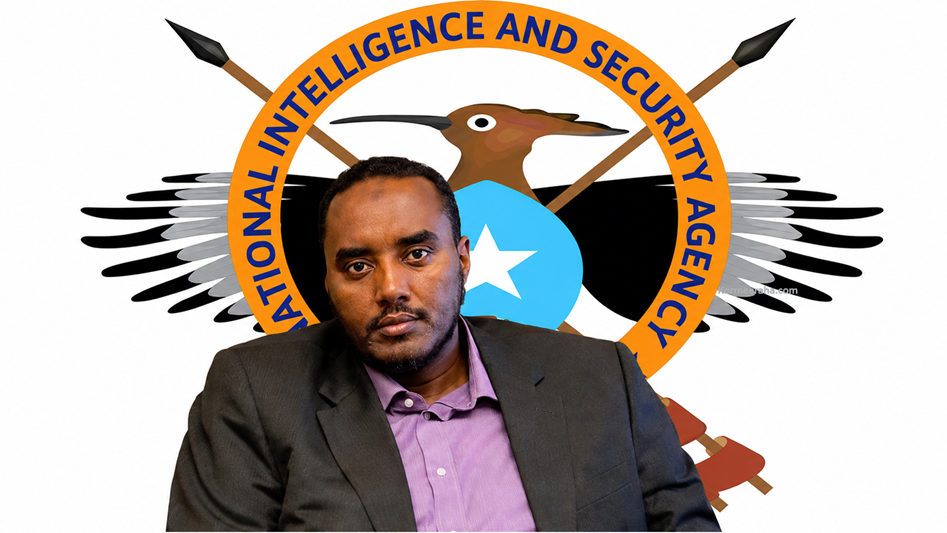
In a rare public reflection, Fahad Yasin—Somalia’s National Security Advisor and former Director General of the National Intelligence and Security Agency (NISA)—has offered Somalis an unprecedented glimpse behind the curtain of their country’s intelligence apparatus. Published on January 20, 2022, Yasin’s article, originally written in Somali, does more than recount bureaucratic achievements. It humanizes the faceless agents who walk among us, the “guardian angels” who have helped pull Mogadishu back from the brink.
From Rubble to Respect
When Yasin was appointed Deputy Director of NISA on August 15, 2018, he inherited an agency in crisis. The numbers he cites are staggering: in some months prior to the restructuring, Mogadishu alone saw more than 85 crimes, with bombings and direct attacks claiming civilian lives with numbing regularity. Monthly fatality reports were presented to President Farmajo—a grim accounting that demanded action.
What Yasin describes is nothing less than an institutional rebirth. Through what he calls a “consensual plan,” NISA was rebuilt not by foreign contractors or imported expertise, but by “Somali boys and girls who care about the development of their country.” This emphasis on indigenous capacity is striking. In an era where African security structures often remain dependent on Western training and funding, Yasin claims to have deliberately discarded anything “whose inception we as a nation did not control.”
The results, according to his account, were dramatic. Monthly security assessments showed the death toll from terrorism falling to the point where some months recorded fewer than nine crimes—a ninety percent reduction in casualties compared to previous years.
The Guardian Angels
Perhaps the most compelling section of Yasin’s piece is his portrait of the Civil Protection Unit—an undercover officer program that he describes as the agency’s most successful project. One anecdote stands out: an undercover agent was offered a district commissioner position but declined, saying, “Civil Protection is the best job I can do for the nation, and that is to protect the lives and property of our community.”
In a country where public office has often been pursued for access and patronage, this story of quiet patriotism challenges easy cynicism. Yasin clearly intends it to do so.
Equally moving is his account of a mother and son who unknowingly joined NISA’s training program simultaneously. The son discovered his mother’s name on his trainee list an hour before she walked into his office to sign her papers. “Much to his delight,” Yasin writes, “his mother, unaware of his work, legally found out where her son worked.” It is a small, human moment that reveals the depth of ordinary Somalis’ commitment to rebuilding their nation.
Intelligence as a Family Affair
Yasin does not shy away from the morally complex realities of intelligence work. He recounts, with apparent pride, an operation where an NISA officer married a female Al-Shabab operative—her second such marriage to an agent. Rather than eliminate him as intended, she became the target of surveillance, leading to the arrest of twelve Shabab members.
The story raises obvious ethical questions about manipulation and deception, even in service of national security. But Yasin presents it as a success story, and one can understand why: in asymmetric warfare against an organization that has killed thousands of civilians, intelligence agencies play by different rules.
Restoring Continental Credibility
Perhaps Yasin’s boldest claim is that NISA has become “one of the most powerful counter-terrorism agencies in Africa”—a statement supported, he says, by visits from directors general of eight countries, including global powers and regional neighbors. More striking still is his recollection of an African intelligence chief who arrived in Mogadishu and announced that he had received his first training at the same NISA center in 1979.
This reference to Somalia’s Cold War-era intelligence capabilities serves multiple purposes. It reminds readers that Somali competence is not novel but restored. It places contemporary NISA within a proud lineage. And it implicitly challenges those who might dismiss Somali capabilities as dependent on foreign support.
The Unspoken Context
A responsible commentary must acknowledge what Yasin leaves unsaid. His tenure at NISA was not without controversy. Critics have accused the agency under his leadership of political interference, extrajudicial actions, and serving factional interests. The line between national security and state repression can blur in any country; in Somalia’s volatile political environment, allegations have flown freely.
Yasin’s article is, necessarily, a partial account. He writes as a patriot and a loyalist to President Farmajo, whose “directives and wills” he describes as the foundation of NISA’s transformation. The piece is as much a defense of Farmajo’s security legacy as it is a chronicle of institutional reform.
Moreover, the dramatic security improvements Yasin describes were unevenly distributed. While Mogadishu saw significant reductions in attacks, rural and regional areas remained vulnerable, and Al-Shabab has proven resilient. The “dramatic decline” in casualties, while real for certain periods, did not represent a permanent defeat of the terrorist group.
A Discreet Man Speaks
Fahad Yasin is described as “a very discreet man” who is nevertheless “the subject of passionate comments from his supporters and his enemies alike.” This op-ed represents a strategic departure from discretion—an attempt to shape public memory of his tenure and to humanize an agency more often associated with fear than with service.
Whether one accepts his framing or not, Yasin has accomplished something valuable. He has reminded Somalis that intelligence agencies are not abstract machines but collections of individuals—mothers and sons, undercover officers who refuse promotions, men who marry enemies for the sake of information. These are, as he puts it, “the human side of these faceless agents who protect the nation.”
Conclusion
Fahad Yasin’s article is a remarkable document: part institutional report, part patriotic memoir, part defense of a controversial legacy. It paints a picture of an agency transformed from a reactive, embattled institution into a respected counter-terrorism force capable of competing with its regional and continental counterparts.
The truth of Somalia’s security transformation, like most truths, is likely more complicated than either Yasin’s defenders or his detractors will admit. But his decision to speak publicly about the human dimensions of intelligence work—the agents, the sacrifices, the small victories—represents a welcome transparency. For a nation still fighting for its survival against violent extremism, understanding the men and women who fight back is not merely interesting. It is essential.
As Yasin concludes, “When you do good deeds, have good intentions, and have educated and skilled people to work with, you can expect good results that will benefit your nation.” Whether history will judge his tenure as such remains to be seen. But the story he tells—of guardian angels walking among us, of mothers and sons serving in secret, of an intelligence agency rising from the ashes—deserves to be heard.