
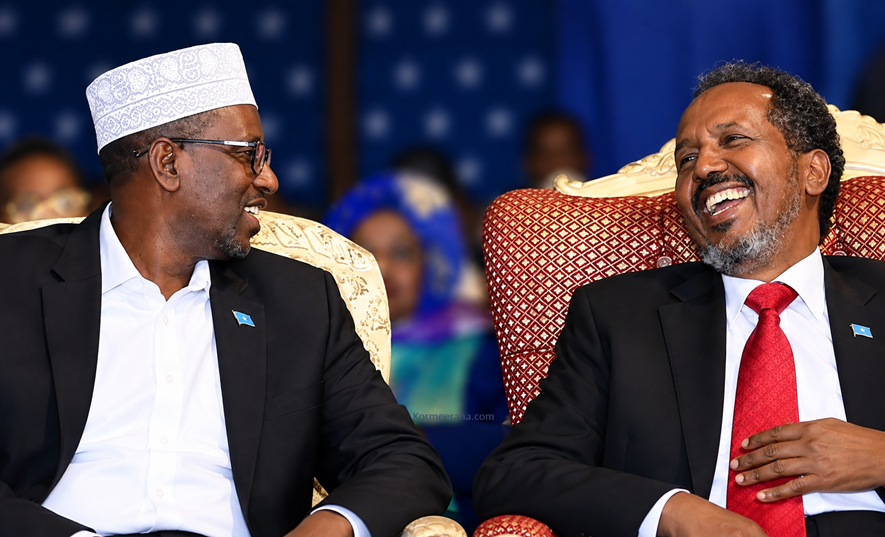
Many Somalis, especially in Mogadishu and the southern regions, struggle to tell the government and the opposition apart. Leaders on both sides come largely from the same sub-clan, and both claim to act in the national interest. Yet, when you look at the political maneuvers of the past week, the difference between them is virtually invisible.
Federal Hijacking: The Illusion of Democratic Elections
On one side is the government of President Hassan Sheikh Mohamud, which no longer holds a legitimate mandate. Under its leadership, Somalia’s constitution, electoral processes, and power-sharing arrangements have been seriously disrupted. The recent regional elections are a case in point.
In Galmudug, following a Supreme Court annulment of a flawed July vote, the federal electoral commission brazenly excluded the Towfiiq Party—the very local opposition party that had successfully won the legal challenge in court. In Hirshabelle, the federal government, operating through the ruling Justice and Solidarity Party (JSP), forcefully pushed the re-election of Ali Gudlawe, blatantly violating the state’s foundational clan power-sharing agreement and sparking massive public protests in Beledweyne. Rather than fostering democracy, the federal government has hijacked regional processes to guarantee uncompetitive, predetermined outcomes.
“Rather than fostering democracy, the federal government has hijacked regional processes to guarantee uncompetitive, predetermined outcomes.”
An Opposition That Refuses to Oppose
On the other side is a self-proclaimed opposition, led by former President Sharif Sheikh Ahmed through the Somali Future Council. It was expected to offer a real alternative, speak for the public, and defend the constitution against these federal overreaches. Yet, a glaring question remains: what kind of opposition fails to clearly oppose what the government does?
The answer lies in the aftermath of the October 22 and 24 elections in Galmudug and Hirshabelle. The opposition had spent months fiercely denouncing the federal electoral framework and the parallel regional processes. Leading opposition candidates even boycotted the votes, recognizing the lack of an independent commission. Yet, when the JSP-backed candidates secured crushing supermajorities—Liibaan Ahmed Hassan winning 72 out of 89 votes in Galmudug, and Gudlawe taking 81 to 13 in Hirshabelle—the opposition’s “boycott” quietly evaporated.
Instead of declaring the processes illegitimate, a wave of high-profile opposition figures rushed to publicly congratulate the winners. Former Prime Minister Mohamed Hussein Roble, former Galmudug President Abdikarim Hussein Guled, and opposition MP Abdirahman Mohamed Hussein (Odowaa) all offered their endorsements. Even those who initially withheld congratulations, including Sharif Sheikh Ahmed, Hassan Ali Khaire, and Abdirahman Abdishakur Warsame, ultimately chose calculated silence over outright rejection. In politics, silence in the face of constitutional breaches is simply passive acceptance.
“In politics, silence in the face of constitutional breaches is simply passive acceptance.”
The Anatomy of a Political Surrender
This phenomenon, which local analysts have rightly labeled a “political own goal,” exposes the true nature of the Somali opposition. What guides them is not principle, the constitution, or a national political program. It is driven by three cynical realities:
First, clan politics still transcends party lines. Many opposition figures who congratulated the winners share close lineage or historical ties with the newly elected leaders. Condemning the outcome would alienate their traditional regional support bases, so they prioritized clan harmony over national opposition solidarity.
Second, “fait accompli” realism. Recognizing that the federal ruling party had already mathematically guaranteed the executive outcomes through manipulated electoral mechanics, these politicians opted to accept reality. Rather than face political isolation, they chose to maintain open diplomatic lines with the new regional heads.
Third, positioning for 2027. With the federal government announcing national elections and inviting opposition leaders to a renewed national dialogue forum, high-profile politicians are offering concessions on these regional results to preserve their seats at the negotiating table. They are using their cooperative stance as leverage for upcoming constitutional talks, sacrificing the integrity of the current elections for future political survival.
A Stark Reality: Neither Side is Serving the Nation
When an opposition reaches this point, it loses its purpose. An opposition that breaks its own boycotts, capitulates to federal “divide and conquer” tactics, and lacks centralized discipline is nothing more than a title without meaning. They have allowed the government to dictate the terms of engagement, proving they are merely a factional rival, not a principled alternative.
The reality, therefore, is stark: neither Hassan Sheikh’s government nor Sharif Sheikh Ahmed’s opposition is serving Somalia. The government keeps the country unstable through heavy-handed federal interference and a system of rule that lacks broad consensus. The opposition offers only an empty, fragmented resistance that changes nothing and ultimately validates the very system it claims to fight.
Somalia needs neither a clan-based government nor a clan-based opposition. It needs politics grounded in the constitution, in free and fair elections, and in a national interest that rises above the clan. Until both sides can offer that, the Somali people will continue to be failed by the very leaders claiming to represent them.
Related
Fractured Federation: Somalia’s Political Polarization and the 2027 Electoral Crisis (October 19, 2026)