

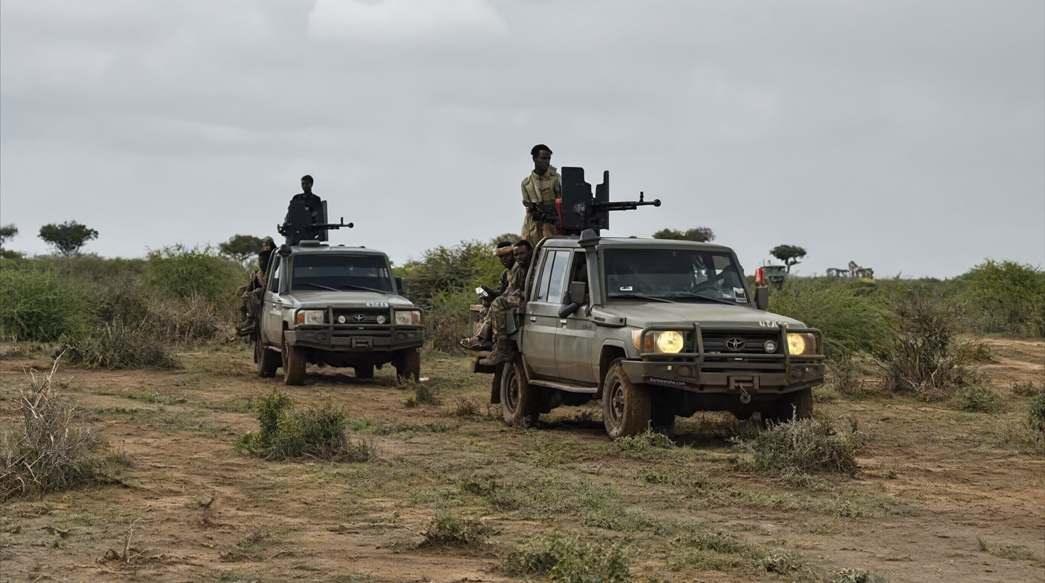
On Monday, October 26, 2026, the strategic corridor of Jamee’o (Jameeco)—linking Leego in Lower Shabelle to Buurhakaba in Bay region—became the site of a devastating clash between Somali National Army commandos and Al-Shabaab militants. The ambush, which survivors have described as a “bloodbath,” has ignited a fierce national debate over military strategy, political interference, and the safety of elite troops.
This analysis examines the tactical failures behind the attack, the devastating human cost—including dozens of soldiers still unaccounted for—and how Mogadishu’s paralyzing political impasse is actively undermining the war against Al-Shabaab.
Battle Details and Casualties from Both Sides
The battle began with an ambush by Al-Shabaab on federal government forces traveling along the road connecting Leego and Buurhakaba, with the objective of retaking control of Buurhakaba. The attack was initiated with a vehicle-borne improvised explosive device that struck the military convoy, followed by hours of direct firefight.
Official casualty figures vary significantly between reports from the opposing sides, reflecting the fog of war. According to the Somali Ministry of Defense, government troops valiantly repelled the ambush, claiming to have killed approximately 75 Al-Shabaab militants and wounded 56 others. Notably, the government did not officially disclose the number of its own soldiers killed in the engagement.
Conversely, independent sources and soldiers’ accounts paint a much grimmer picture for the national army. Survivors of the harrowing ordeal have described the chaotic ambush as a sheer “bloodbath,” emphasizing the overwhelming and brutal nature of the assault. Reuters, citing military personnel and local residents, reported that dozens of government soldiers were killed in the clash, with one soldier confirming that the bodies of nearly 40 fallen troops and over 100 wounded personnel were transported back to Mogadishu.
Compounding the tragedy and the confusion on the ground, dozens of soldiers remain unaccounted for in the aftermath, leaving families and military officials in a state of agonizing suspense. Meanwhile, Al-Shabaab claimed responsibility for destroying military vehicles, taking control of the battlefield, and capturing prisoners.
“Survivors described the ambush as a ‘bloodbath,’ yet dozens of soldiers remain unaccounted for while official reports focus solely on enemy casualties.”
The Debate Over “Abandonment” and Intelligence Failure
The most heavily debated issue within Somalia following the battle is whether the government forces were deliberately abandoned or mismanaged during the operation. Although there is no official, independent verdict confirming this, several compounding factors have fueled widespread suspicion.
Chief among these is the lack of strategic direction and the entanglement of military operations with political conflicts. The elite Danab and Gorgor commandos were deployed to Buurhakaba amidst a tense political standoff between the federal government and militias loyal to the former President of South West State, Abdiaziz Laftagareen. Critics argue that the national army was inappropriately used for political maneuvering rather than counter-terrorism.
Furthermore, a glaring intelligence failure and lapse in route security have raised eyebrows. Observers question how a heavily armed military convoy could fall into an open ambush involving vehicle bombs without receiving preliminary intelligence or proper route clearance. This operational blindness was compounded by the apparent abandonment of medical evacuation protocols, with reports indicating that the wounded did not receive emergency medical evacuation when critically needed.
Finally, the government’s conspicuous silence regarding its own losses has deepened the public’s mistrust. By exclusively highlighting the number of Al-Shabaab fighters killed while omitting any mention of its own casualties, the administration has created a pervasive perception that the true scale of the tragedy is being covered up.
Political Implications and Security Setbacks
Security analysts have described this incident as a major political and security failure, dealing a severe blow to the government’s previous gains. The fallout from the recent events around Buurhakaba and Jamee’o highlights three critical vulnerabilities.
First, there is a persistent inability to secure vital supply routes. The road connecting Mogadishu, Lower Shabelle, and Bay is a crucial economic and military lifeline, yet this attack demonstrates that the government has failed to secure these long, vulnerable corridors effectively.
Second, the diversion of military power to resolve political disputes has proven disastrous. Using the national army to enforce political outcomes in federal member states, rather than resolving them through dialogue, has weakened the military’s overall capacity and provided Al-Shabaab with a golden opportunity to exploit the resulting divisions.
Finally, the battle has resulted in a significant setback for ongoing operations and troop morale. The heavy losses suffered by the elite special forces could lead to a strategic retreat or a pause in military operations against Al-Shabaab in the region, while simultaneously lowering the morale of frontline troops and eroding the trust of local populations.
“Using the national army to enforce political outcomes has weakened military capacity and handed Al-Shabaab a golden opportunity to exploit Somalia’s divisions.”
History of Al-Shabaab Ambushes: Past Lessons
The Jamee’o ambush mirrors a devastating pattern of Al-Shabaab attacks that have repeatedly stalled government offensives since 2022.
In May 2022, militants executed a complex pre-dawn assault on a Burundian ATMIS base in El Baraf using a massive vehicle bomb followed by heavy gunfire, highlighting the persistent vulnerability of forward operating bases to multi-stage breaches.
This was followed by the Cawsweyne/Osweyne attack in August 2023, a major turning point where militants overran a hastily erected Somali National Army garrison in Galgaduud. Using multiple vehicle bombs to breach defenses, they inflicted heavy casualties, seized military equipment, and forced government forces to retreat from recently liberated territories.
More recently, in 2024, repeated and fierce clashes in the strategic Middle Shabelle hub of Ruun-Nirgood underscored the fluid nature of the conflict, as government and local forces struggled to permanently hold the area against persistent, terrain-savvy counter-attacks.
These incidents collectively reveal Al-Shabaab’s consistent tactical playbook: utilizing vehicle bombs as breaching tools to induce shock, exploiting the lack of deep fortifications in newly captured bases, and leveraging intelligence to time attacks perfectly.
Furthermore, the recurring delay in Quick Reaction Forces and medical evacuations consistently leaves isolated troops vulnerable, explaining the mechanics behind the Jamee’o ambush and underscoring the urgent need for tactical reform.
“Al-Shabaab’s playbook is consistent: use VBIEDs to breach defenses, exploit weak fortifications, and leverage intelligence to time attacks perfectly.”
Crucial Recommendations for the Federal Government
To prevent such disasters in the future, security experts and politicians have offered several crucial recommendations to President Hassan Sheikh’s administration.
Foremost among these is the need to separate security operations from political disputes. Elite special forces must never be diverted to political rivalries in federal member states; instead, political disputes must be resolved at the negotiating table to avoid weakening national army unity.
Additionally, the government must undertake a comprehensive revision of its route security strategy. This includes increasing the use of drones for route reconnaissance before ground troops move and strengthening military intelligence-sharing systems to prevent surprise ambushes.
Another critical area for improvement is the development of emergency evacuation plans. Every deploying unit must have a clear air-medical evacuation protocol, and every new base must be equipped with robust physical defenses against high-speed vehicle bombs.
Transparency is equally vital; when a major battle results in casualties, the government must openly acknowledge the losses suffered by its forces to foster a sense of shared responsibility and portray the government as accountable.
Finally, the administration must prioritize developing stable administrations in liberated areas by swiftly deploying acceptable local governance, healthcare services, and fair judicial systems to prevent the militant group’s influence from resurging.
Conclusion
The Jameeco incident is a stark warning requiring the federal government to conduct a comprehensive review of its military and political strategies. However, these military setbacks cannot be viewed in isolation from the broader political climate in Mogadishu, which is currently paralyzed by a severe electoral impasse.
The federal elections have become a toxic focal point for national tensions: on one side stands an inflexible president whose term has expired but who steadfastly refuses to step down, while on the other is a fractured and divided opposition. This paralyzing crisis at the highest levels of the federal state plays directly into the hands of Al-Shabaab.
“Mogadishu’s paralyzing electoral impasse plays directly into Al-Shabaab’s hands; without political unity, military gains will remain fragile.”
As the political elite remain locked in a self-serving power struggle, the strategic direction, resource allocation, and national unity required to defeat the insurgency are fatally compromised. Given these current developments, the security situation is likely to deteriorate further unless this overarching political crisis is resolved.
Until federal disputes are settled through genuine dialogue and constitutional adherence rather than brinkmanship, and until road security is managed professionally, the hard-won gains against extremist groups will remain fragile. Ultimately, until political unity and institutional legitimacy are restored, the blood spilled at Jameeco—and the dozens still missing—will be in vain. These are the indispensable foundations for any lasting victory.
Related
- Fractured Southwest: The Geopolitical Battle for Mogadishu (September 3, 2026)
- The Shub Assassination Plot: Sovereignty, Suspicion, and Spoiled Evidence (September 30, 2026)