
For thirty-four years, Hargeisa waited for the world to notice its stable democracy and functioning state. When a UN member state finally answered the call, it didn’t bring the breakthrough Somaliland hoped for. It brought a geopolitical minefield.
For more than three decades, the breakaway region of Somaliland has played the long game of statehood. It has printed its own currency, issued its own passports, and maintained a fragile but functional democratic system, all while enduring profound diplomatic isolation. Since declaring independence in 1991, Hargeisa has waited for a single UN member state to legitimize its existence.
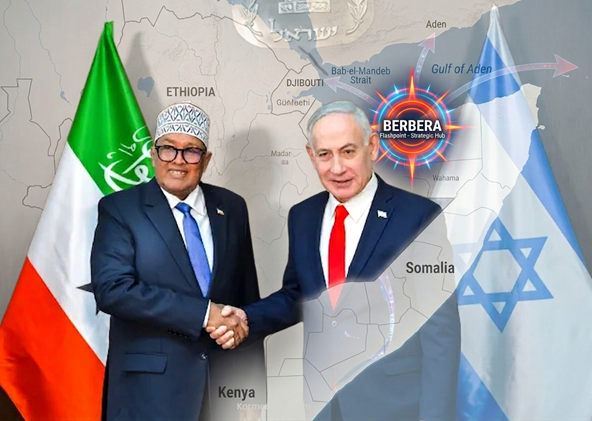
That moment finally arrived in December 2025. But the hand that reached out did not belong to Washington, London, or Riyadh. It was Israel—a nation currently facing genocide proceedings at the International Court of Justice and widely condemned across the Muslim world for its war in Gaza.
Regional analysts have described the recognition as both unexpected and potentially catastrophic for the Horn of Africa. Now, five months later, with President Abdirahman Irro’s recent visit to Tel Aviv cementing the ties, the central question hanging over Hargeisa is no longer if they achieved recognition, but at what price.
The Anatomy of Desperation
Experts tracking the region agree: Somaliland’s abrupt pivot toward Israel was driven not by external opportunity, but by a perfect storm of internal pressures.
First came the territorial hemorrhaging. In 2023, the strategic Las Anod region broke away from Somaliland’s control, with the Mogadishu-based federal government actively supporting a rival administration on land Hargeisa considers part of its British colonial inheritance. This was a devastating blow to Somaliland’s narrative of stable, unified governance.
Second, domestic political survival. When President Abdirahman Irro won the November 2024 election, whispers circulated that his administration might soften its stance and favor negotiations with Mogadishu. Eager to prove its unwavering commitment to independence, the new government pushed aggressively for an international breakthrough—perhaps too aggressively.
Finally, there was the ghost of a failed precedent. In January 2024, Somaliland signed a highly publicized memorandum of understanding with Ethiopia, offering a 50-year naval lease in exchange for potential recognition. Following intense pushback from Somalia and the international community, the deal collapsed. With the Ethiopian door slammed shut, Hargeisa turned to the only remaining taker: Israel.
The Red Sea Chessboard
Prime Minister Benjamin Netanyahu publicly hailed the recognition as a natural expansion of the Abraham Accords. But beneath the diplomatic rhetoric lies a harder, more transactional strategic calculus.
For Israel, establishing influence along the Red Sea is a vital counterweight to the threat posed by the Ansarallah (Houthi) forces in Yemen. A foothold in Somaliland offers Tel Aviv critical leverage and intelligence-gathering capabilities in a volatile maritime corridor. Reports of discussions regarding an Israeli military presence at the strategic port of Berbera have only fueled these suspicions.
However, this leverage transforms Somaliland into a geopolitical lightning rod. Any Israeli military cooperation would inevitably invite retaliation from these Iran-backed Yemeni forces, as well as from Al-Shabaab militants already active in neighboring Somalia. Whether a nascent state like Somaliland is prepared to absorb the shockwaves of such a proxy conflict remains a terrifying open question.
A Region Unites in Condemnation
The diplomatic fallout was swift and near-universal. The African Union, the Arab League, the Organization of Islamic Cooperation, Egypt, Turkey, Djibouti, and dozens of other states issued fierce condemnations. Somalia’s president dismissively declared that “Somali territory cannot be divided by a piece of paper written by Israel and signed by Netanyahu.”
Yet, Mogadishu’s diplomatic push has remained largely rhetorical. The federal government has pursued few concrete measures to pressure Hargeisa, hampered by its own domestic priorities and a lack of de facto authority to enforce its territorial claims on the ground.
Meanwhile, Israel has skillfully exploited the situation to deepen existing fault lines within the Arab League. Complicating matters further is Ethiopia’s deeply contradictory role: despite publicly condemning the recognition to respect Somalia’s territorial integrity, Addis Ababa has quietly served as an intermediary, providing meeting grounds and safe airspace for Israeli officials traveling to Hargeisa.
Notably, even the United States—Israel’s closest ally—has refused to follow suit. Washington continues to classify Somaliland as a region within Somalia. If this policy holds, it could fundamentally alter Hargeisa’s calculus, as its hopes for a cascade of recognitions have remained entirely unfulfilled.
The Domestic Boiling Point
The most volatile costs of this alliance are being paid not in diplomatic halls, but on the streets of Somaliland.
With over 99% of its population identifying as Muslim, the government’s alignment with a state accused of atrocities in Gaza has sparked fierce internal dissent. Religious leaders and intellectuals who have publicly opposed the alliance report being silenced, with some facing arrest. Expression is being stifled in the name of diplomatic expediency.
Yet the most dangerous fractures are emerging in the western periphery, far from the capital. For Hargeisa’s political elite, the Israeli recognition was a triumphant validation of statehood. For the youth in the Awdal region, it deepens an unwanted separation from Somalia and tightens the grip of a government they already reject. The foreign minister’s celebratory rhetoric has become a potent symbol for Awdal’s youth of an elite chasing external legitimacy while ignoring the internal fractures threatening to tear the territory apart.
Compounding these grievances are alarming, unconfirmed international reports suggesting Israel has discussed using Somaliland’s territory to resettle Palestinians displaced from Gaza. While logistically and politically insurmountable, Hargeisa’s failure to immediately and categorically reject the possibility has deeply alarmed regional observers, further alienating an already uneasy populace.
The Five-Month Hangover
So, what has Somaliland actually gained?
Five months after the December 2025 announcement, the reality is stark. No other nation has followed Israel’s lead. The Abraham Accords have not expanded into the Horn of Africa. The U.S. has not budged. And while Israel appointed an ambassador to Somaliland in April 2026, visible military or economic cooperation remains conspicuously absent.
The recognition appears highly transactional. Somaliland’s leadership likely gambled that Washington would eventually follow Tel Aviv’s lead. At this point, that perspective is rapidly fading. Israel is an unpredictable partner; it can walk away from the arrangement at any moment.
History offers sobering cautionary tales. The South Lebanon Army collapsed the moment Israel withdrew its support. The Shah of Iran lost everything when his Israeli ties proved insufficient to save his regime. Somaliland, an administration desperately seeking enduring legitimacy, may soon discover that policies forged under one leadership can be swiftly reversed under another.
The Only Way Out
Rather than pursuing external gambits with isolated nations, the only durable future for Somaliland lies in genuine dialogue with Mogadishu. The sooner the federal government engages Hargeisa in good faith, the better. Regional influencers with leverage—namely Turkey, the UK, and the U.S.—must pressure both sides to sit at the negotiating table. Such a dialogue would be a definitive win-win for Somaliland, the federal government, and the broader stability of the Horn of Africa.
For now, however, Somaliland has traded thirty-four years of patient, principled diplomacy for a single handshake from one of the world’s most diplomatically isolated states. Whether that trade proves to be a historic breakthrough or a catastrophic betrayal—and whether Hargeisa solidifies its status as a capital or descends into a battlefield—will unfold in the tense months ahead.